Sperm
Male gamete that fuses with egg to form a diploid zygote.

Destination Kaikōura · CC BY 4.0
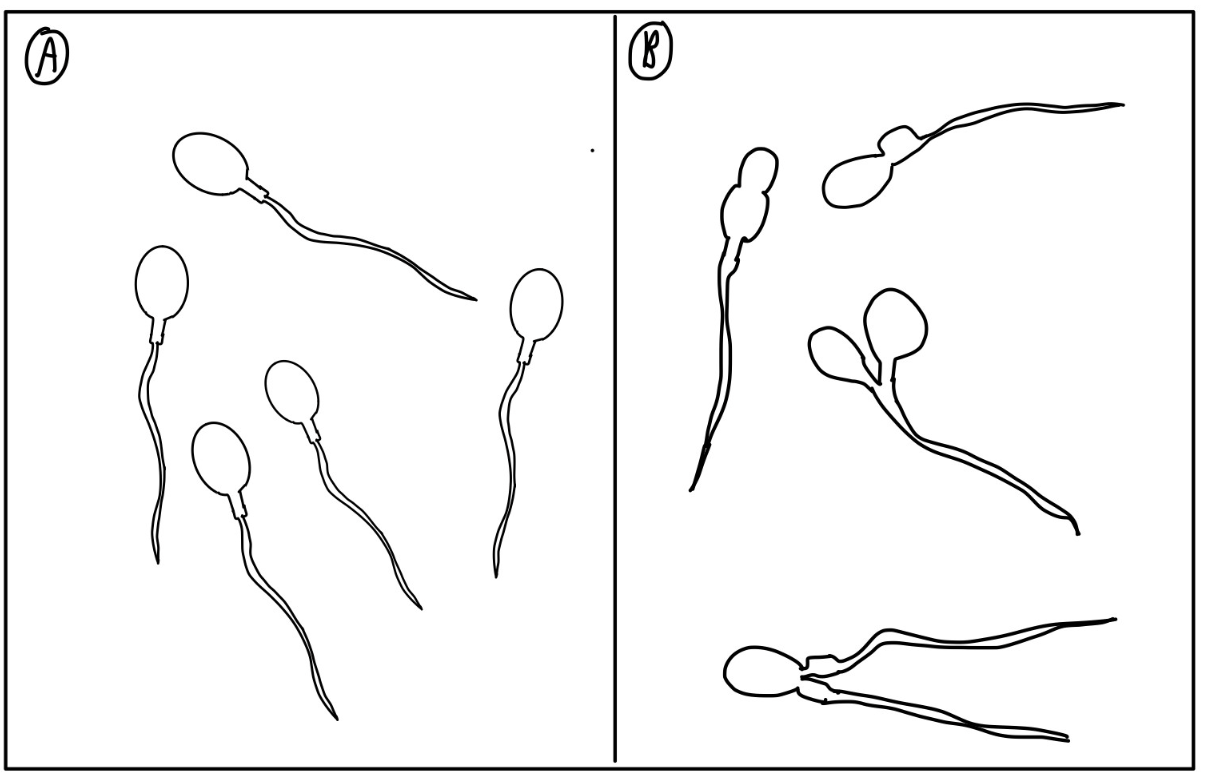
Sperm is the male reproductive cell, or gamete, in anisogamous forms of sexual reproduction, where it is the smaller cell compared to the female egg. Sperm cells contribute approximately half of the nuclear genetic information to the diploid offspring and are essential for fertilization, initiating the development of a new organism. In animals, sperm are motile with a flagellum, while some plants and fungi produce non-motile sperm.
- type
- Male reproductive cell (gamete)
- function
- Deliver male pronucleus and centrioles to ovum during fertilization
- size
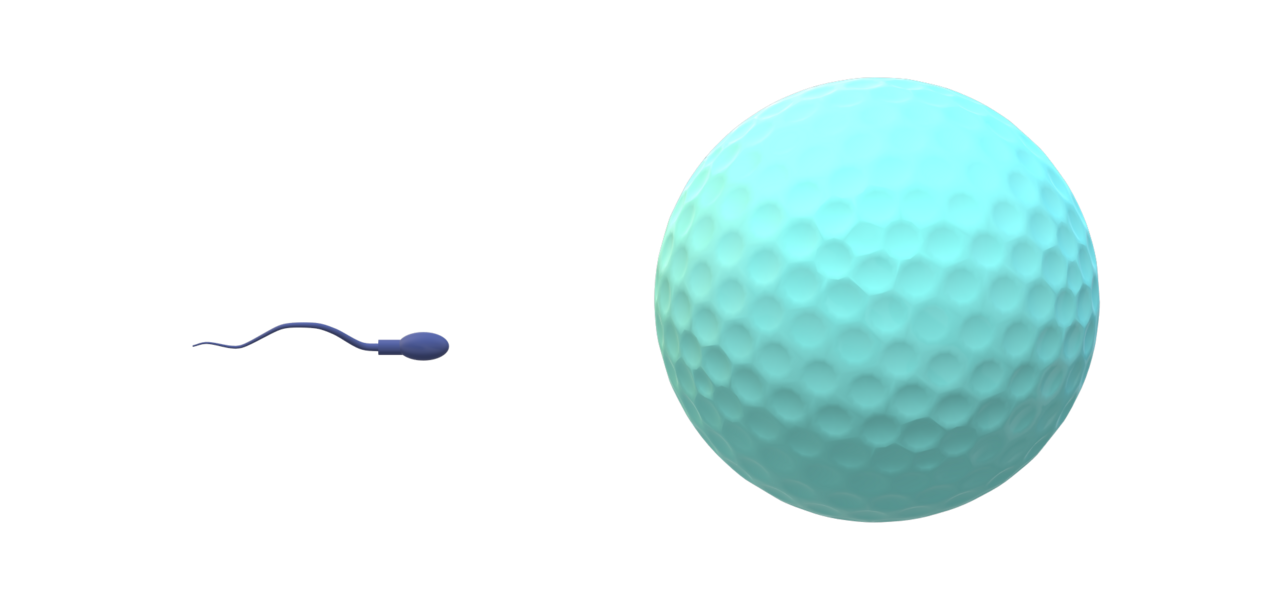
- Head approximately 5.1 by 3.1 μm; tail about 50 μm long
- speed
- Propels at about 1 to 3 millimetres per minute
- formation_location
- Seminiferous tubules of testicles in amniotes
- formation_duration
- Approximately 3 months from start to finish
- chromosome_count
- Haploid, with 23 chromosomes in humans
Lore & Background
Sperm cells form during spermatogenesis, a process that in amniotes takes place in the seminiferous tubules of the testicles. This process begins with spermatogonia, which differentiate into spermatocytes, then undergo meiosis to produce spermatids, which mature and construct a tail. The entire process occurs constantly and takes around 3 months. In mammals, sperm is stored in the epididymis and released through the penis in semen during ejaculation.
Reader's Guide
Sperm are fundamental to sexual reproduction in anisogamous species, providing half the nuclear genetic material and, in humans, the centriole necessary for the first cleavage division of the zygote. The evolution of sperm from isogamy is not directly evidenced by fossils, so mathematical models are emphasized. In humans, sperm cells are haploid and come in two types carrying either an X or Y chromosome, determining the sex of offspring. Sperm are vulnerable to oxidative DNA damage, and exposure to certain hazards may increase aneuploidy risk. The blood-testis barrier protects developing sperm from immune attack, and glycoproteins on ejaculated sperm help avoid rejection by the female immune system. Sperm's limited lifespan and need for capacitation before fertilization highlight their specialized role.
Did You Know?
- Sperm cells contribute approximately half of the nuclear genetic information but typically do not contribute mitochondrial DNA.
- Human spermatozoa possess a truncated base excision repair pathway mediated by 8-oxoguanine DNA glycosylase 1 (OGG1).
- The word 'sperm' is derived from the Greek word σπέρμα, sperma, meaning 'seed'.
- Sperm cells cannot divide and have a limited lifespan, but after fusion with an egg cell, a totipotent zygote begins developing.
The Cellular Journey: From Meiosis to Zygote
Sperm exists as a haploid gamete, carrying a single set of chromosomes that will one day merge with an equally haploid egg cell to form a diploid zygote. Before a sperm cell ever reaches that moment, it passes through meiosis, a two-stage division process in which a diploid precursor first replicates its DNA into four copies of each chromosome. The homologous chromosomes then align their sequences side by side, and during this pairing window they swap similar-but-not-identical stretches of genetic code in a process called recombination. This exchange is the engine of genetic diversity: because the two homologs are never perfectly identical, every resulting gamete carries a slightly different mosaic of inherited material. At fertilization, the sperm nucleus fuses with the egg nucleus, each contributing exactly half the zygote's genetic blueprint. From that single diploid cell onward, repeated rounds of mitosis—divisions that preserve the chromosome count—build the organism's full multicellular body. In plants, this diploid stage, the sporophyte, later produces spores by meiosis, which in turn grow into the haploid gametophyte that generates the next generation of gametes by simple mitosis, a cycle called alternation of generations.
The Two-Fold Cost and the Deep Past
The very existence of sperm sits at the center of what evolutionary biologists call the paradox of sex. An asexual lineage, in which every individual can produce offspring, should in principle grow faster generation after generation. Sexual reproduction carries a built-in fifty-percent penalty: only half of any organism's genes make it into a given child, and only half of a sexual population are capable of bearing young. Yet the fossil record pushes the first evidence of sexual reproduction in eukaryotes back to the Stenian period, roughly 1.05 billion years ago, meaning this costly strategy has persisted for an extraordinary span. The payoff is genetic diversity. By shuffling homologous chromosomes during meiosis and combining two separate genomes at fertilization, sexual lineages resist the slow accumulation of harmful mutations and adapt more readily to shifting environments. Population size matters: larger groups appear to harvest these benefits more quickly than small ones. More recent models add that slowly reproducing, complex organisms gain a particular edge, because sexual reproduction lets them express traits tuned to specific habitats and survival strategies.
Sexual Selection: The Force That Shapes the Sperm's World
Sperm production is inseparable from the broader machinery of sexual selection, a mode of natural selection in which individuals out-reproduce their peers by being more successful at securing a mate. In most animal species the pattern is asymmetric: females tend to choose, while males compete through combat, elaborate displays, or the evolution of extreme physical features. A positive-feedback loop known as Fisherian runaway can drive these traits to spectacular extremes. The result is sexual dimorphism—visible differences between males and females in body size, strength, ornamentation, behavior, and morphology. A peacock's vast, unwieldy tail makes daily survival harder, yet hens prefer males whose feathers are vibrant and healthy, signaling robust survival ability. Lionesses favor males with darker, fuller manes even though those same manes increase heat stress. Female deer gravitate toward bucks with larger antlers, a proxy for higher fitness. All of these traits evolved in males because of the selective pressure that sexual reproduction, and the sperm it produces, places on the population.
Anatomy and Distribution: Where Sperm Travels Across the Tree of Life
The route a sperm cell takes to reach an egg varies enormously across the animal kingdom. In placental mammals, sperm exits the penis through the male urethra and enters the female vagina during copulation, while the egg travels into the uterus via the oviduct. Other vertebrate species, of both sexes, rely on a shared cloacal opening for the release of either sperm or eggs. Beyond animals, sexual reproduction is the dominant life cycle among multicellular eukaryotes, including fungi and plants, and even some unicellular eukaryotes participate. Prokaryotes—bacteria and archaea, which lack a true cell nucleus—do not reproduce sexually, though processes such as conjugation, transformation, and transduction introduce new genetic material in ways that loosely parallel sexual reproduction. Some of the proteins and cellular features essential for sex may actually trace their origins back to bacterial ancestors, even though sexual reproduction itself is believed to have emerged in an ancient eukaryotic lineage.
Gallery
Frequently Asked Questions
Who is Sperm?
Sperm is the smaller male gamete in anisogamous sexual reproduction, the counterpart to the larger female egg. In animals it bears a flagellum for swimming, while in certain plants and fungi the equivalent cell stays non-motile.
What are Sperm's powers and role?
Its core function is to carry the male pronucleus and centrioles into the ovum at fertilization, thereby supplying roughly half of the nuclear DNA that will build a diploid offspring. In animal species it can propel itself at about one to three millimetres per minute to reach the egg.
How does Sperm's story end?
The individual sperm cell's narrative closes the instant it fuses with the egg, producing a diploid zygote that launches the development of a new organism. After that merger the sperm no longer exists as a separate entity.
Why is Sperm important?
Without it, fertilization cannot take place in anisogamous species and no new diploid offspring can be initiated. It is the indispensable vehicle that delivers the paternal half of the genetic blueprint to the egg.
Where is Sperm made and how long does the process take?
In amniotes, sperm cells are generated within the seminiferous tubules of the testicles. The full maturation journey runs approximately three months from the first stem-cell division to a fully formed, motile cell with a head around 5 by 3 micrometres and a tail near 50 micrometres long.
More in Reproduction & Development 1-19
Spotted an error? Know more?
This is a living reference — every entry is fact-audited, and reader corrections feed straight into our audit queue. Suggest an edit · See this site's audit record