Spermatogenesis
Process producing haploid sperm from germ cells in testes.

L'Hernault, S.W. · CC BY 2.5
Spermatogenesis is the process by which haploid spermatozoa (sperm) develop from germ cells in the seminiferous tubules of the testicle. It is the male version of gametogenesis, essential for sexual reproduction, and begins during puberty, continuing usually uninterrupted until death. The process involves mitotic division of spermatogonial stem cells, meiotic divisions producing spermatocytes and spermatids, and finally spermiogenesis to form mature spermatozoa.
- process
- Spermatogenesis
- type
- Male gametogenesis
- location
- Seminiferous tubules of testes; maturation in epididymis
- temperature_requirement
- 1°–8°C below body temperature (37°C)
- key_regulation
- DNA methylation and histone modification
Lore & Background
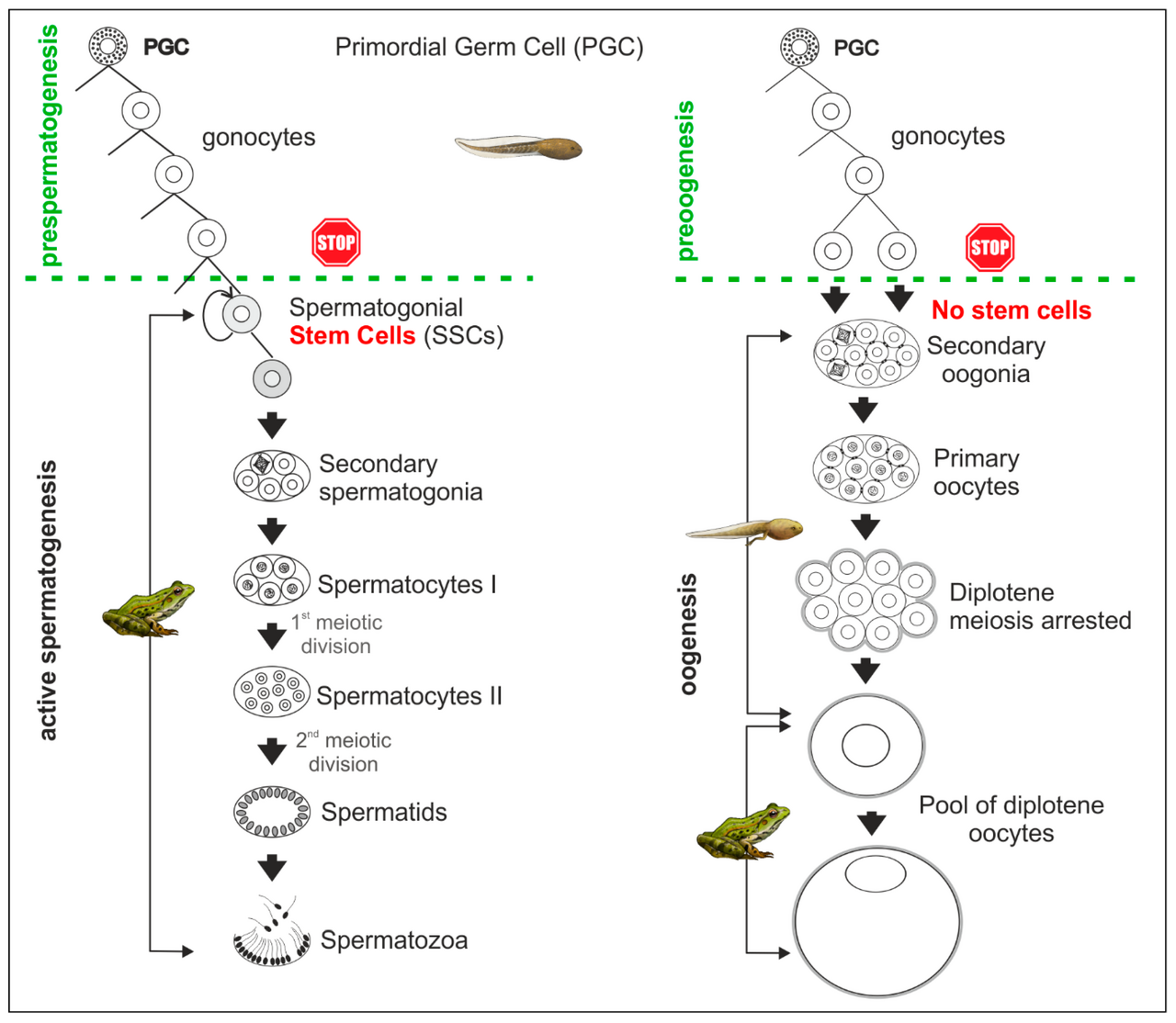
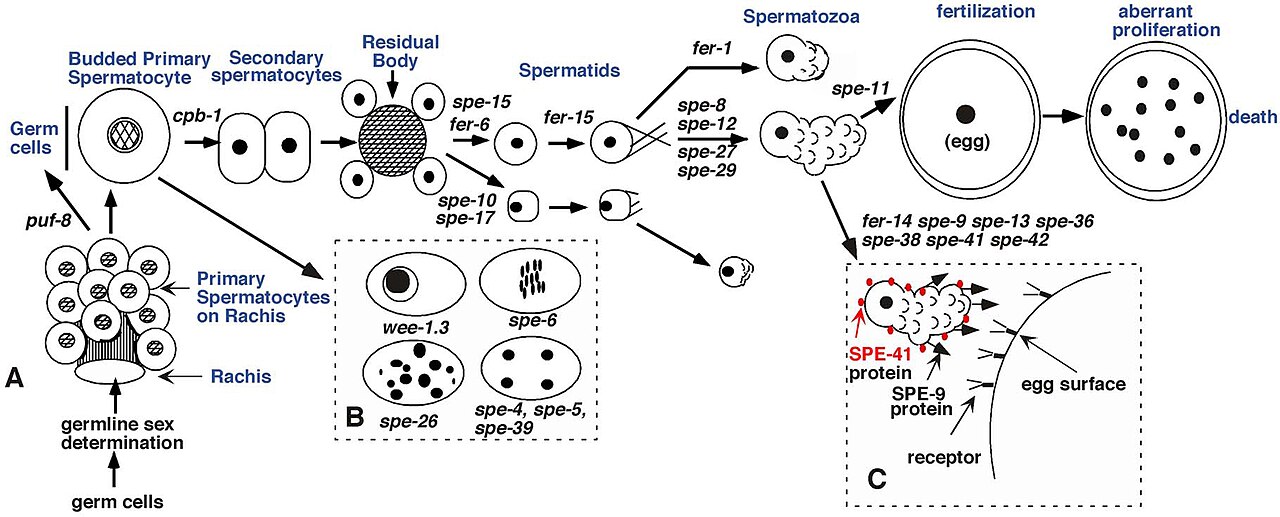
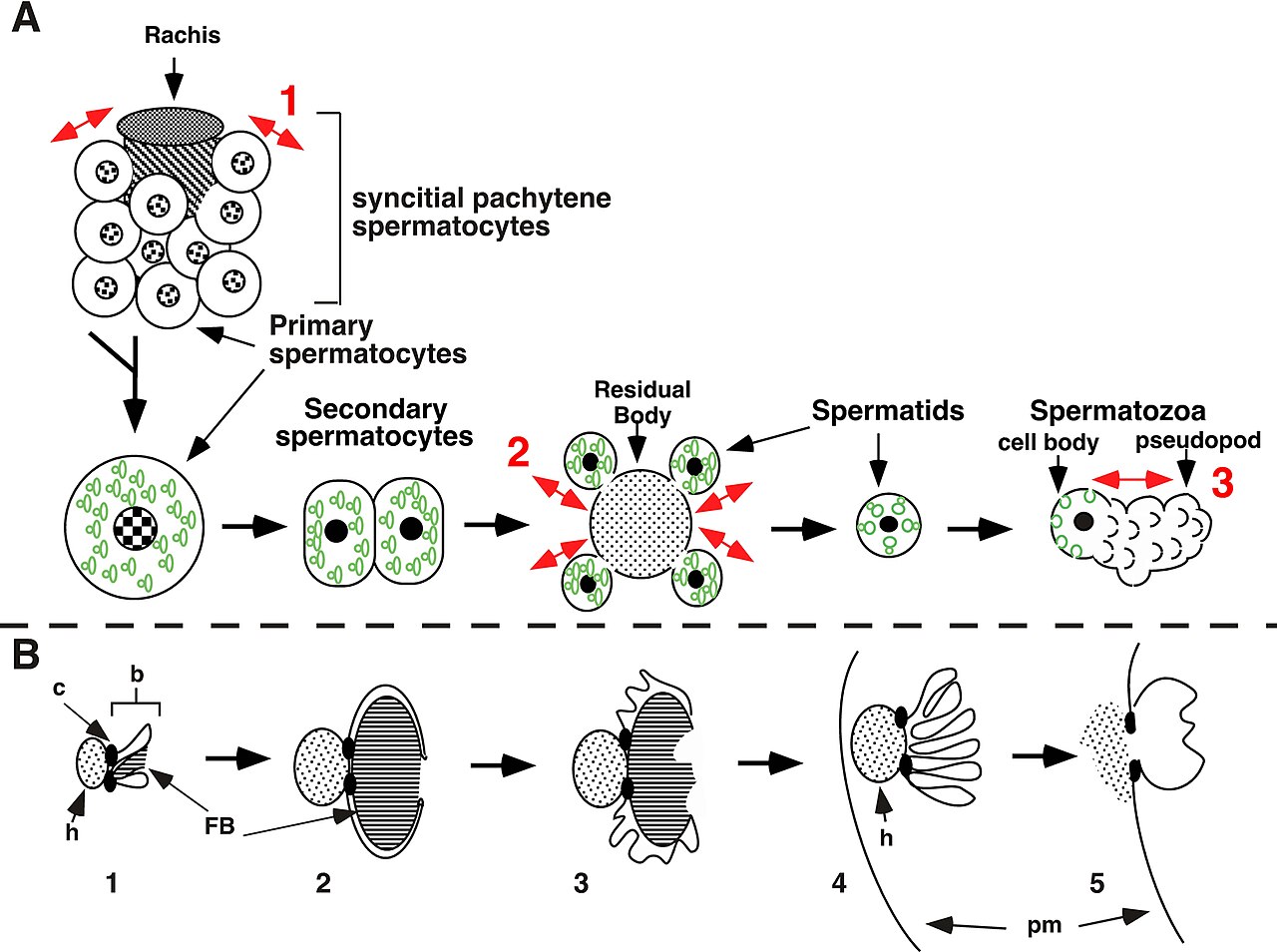
Spermatogenesis starts with mitotic division of spermatogonial stem cells near the basement membrane of seminiferous tubules. Type A cells replenish stem cells; type B cells differentiate into primary spermatocytes. Each primary spermatocyte undergoes meiosis I to form two secondary spermatocytes, which then undergo meiosis II to produce four haploid spermatids. Spermatids transform into spermatozoa via spermiogenesis, involving tail formation, DNA packaging with protamines, and acrosome development.
Reader's Guide
Spermatogenesis is fundamental to sexual reproduction, producing haploid male gametes that combine with female oocytes to form a diploid zygote. Errors in this process can lead to chromosomal abnormalities such as Down syndrome or Klinefelter syndrome, and often result in spontaneous abortion. The process is temperature-sensitive, requiring testes to be 1°–8°C cooler than body temperature. Sertoli cells provide structural and metabolic support throughout differentiation. The DNA damage response machinery, including FMRP protein, helps maintain genomic integrity during meiosis. Spermatogenesis occurs asynchronously in waves along the seminiferous tubules, with mature sperm released into the lumen and transported to the epididymis for final maturation and storage.
Did You Know?
- Spermatogenesis requires a temperature 1°–8°C lower than normal body temperature of 37°C.
- Each cell division from spermatogonium to spermatid is incomplete, with cells remaining connected by cytoplasmic bridges for synchronous development.
The Cellular Journey Through the Seminiferous Tubule
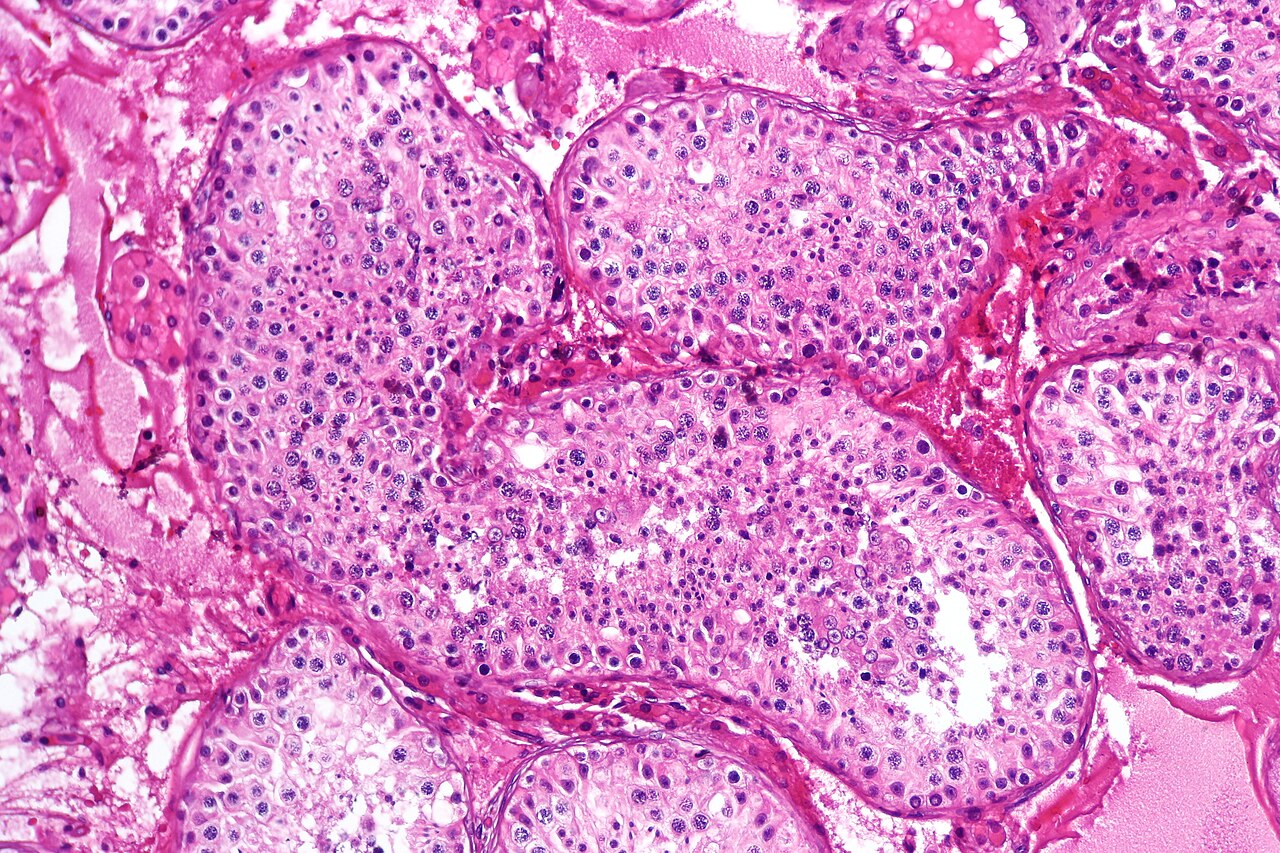
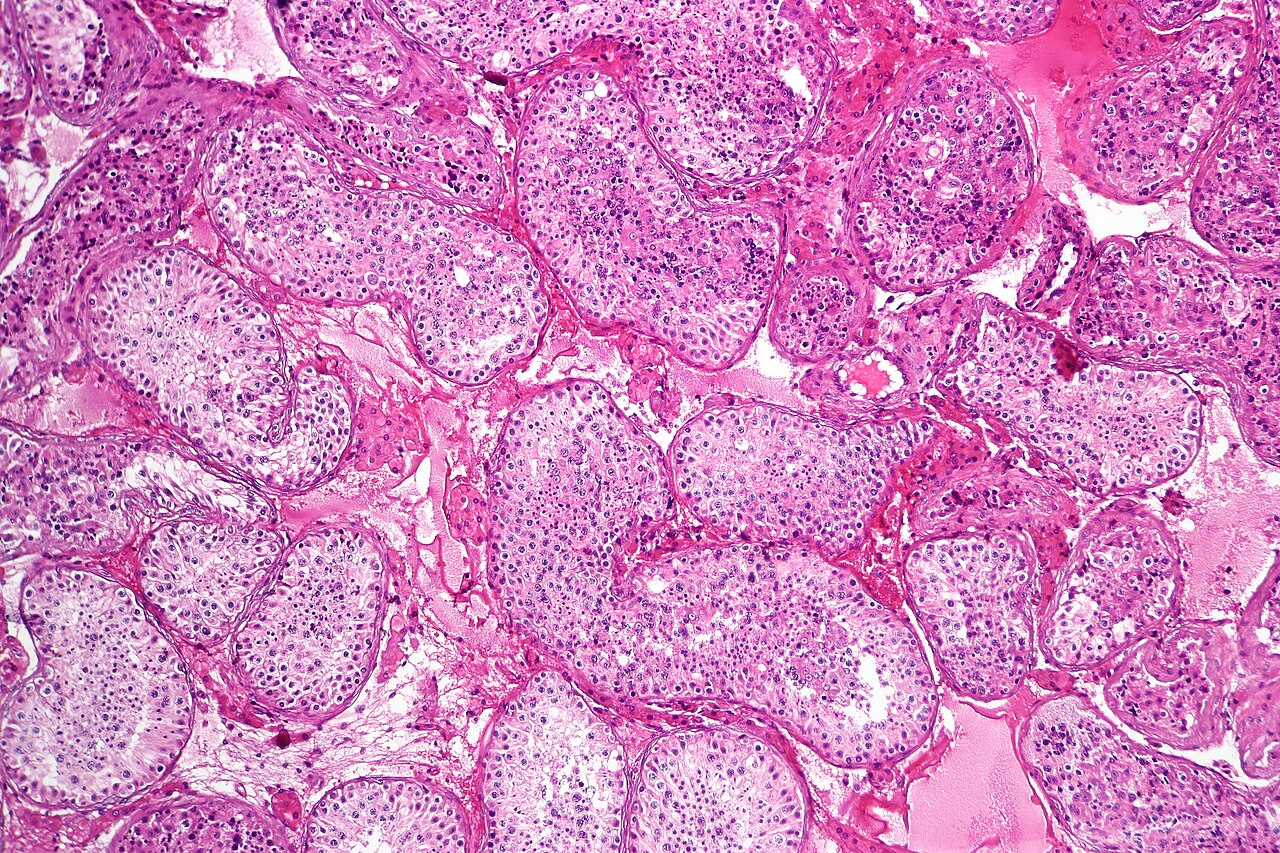
Spermatogenesis unfolds as a remarkable centripetal migration within the seminiferous tubules of the testicle. The story begins at the basement membrane, where spermatogonial stem cells divide mitotically. This division yields two fates: Type A cells that replenish the stem cell pool, and Type B cells that commit to becoming primary spermatocytes. From there, the primary spermatocyte enters meiosis I, splitting into two secondary spermatocytes, which then undergo meiosis II to produce four haploid spermatids. These spermatids are remodeled through spermiogenesis into mature spermatozoa. As cells progress, they travel progressively deeper into the tubule until the finished spermatozoa are deposited into the lumen. Because divisions occur asynchronously, a single transverse cross-section of a tubule reveals cells at every conceivable maturation stage simultaneously. This coordinated yet staggered progression is termed a spermatogenic wave, ensuring a continuous supply of developing gametes.
Chromosomal Stakes and the Engine of Genetic Variation
The entire enterprise of spermatogenesis serves one critical biological purpose: producing haploid spermatozoa capable of fusing with an oocyte to restore the full diploid chromosome complement in a zygote. If this halving failed, the offspring would carry double the normal chromosome count, leading to severe congenital defects or spontaneous abortion. In humans, errors in the process have been linked to conditions such as Down syndrome and Klinefelter syndrome. Beyond mere chromosome number, meiosis introduces vital genetic diversity. During the division from spermatogonium to spermatid, random assortment of parental chromosomes and chromosomal crossover events shuffle genetic material, ensuring each gamete is genetically unique. The DNA damage response machinery, including the protein FMRP, actively binds meiotic chromosomes to regulate repair dynamics. Specialized repair pathways—homologous recombinational repair and non-homologous end joining—scrub damage from the genome before it is passed to progeny, safeguarding the integrity of the next generation.
The Temperature-Sensitive Workshop
Spermatogenesis is exquisitely sensitive to its physical environment. In mammals, the process is anchored in the seminiferous tubules of the testes, housed within the scrotum, which maintains a temperature one to eight degrees Celsius below the standard core body temperature of 37 degrees Celsius. This cooler microclimate is not a trivial detail; it is a prerequisite for producing viable sperm. The initial stages of cell division and differentiation occur within the tubules, while the later maturation and storage phases take place in the epididymis, where developing gametes complete their final transformations before being held in reserve until ejaculation. Clinically, minor temperature fluctuations—such as those caused by an athletic support strap—do not appear to impair sperm viability or count, suggesting the system tolerates small shifts but depends on the overall cooler environment. The location is thus not incidental but fundamental: the scrotal position of the testes is an evolutionary adaptation that creates the thermal conditions without which normal spermatogenesis would falter.
Duration, Daily Output, and a Lifelong Operation
In humans, the full arc of spermatogenesis spans a surprisingly long interval. Estimates derived from tritium-labelled biopsies place the duration at roughly 72 to 74 days, while DNA clock measurements suggest a longer window of approximately 120 days. When the subsequent transport through the ductal system is factored in, the total timeline stretches to about three months. Despite this extended production cycle, the testes are extraordinarily prolific, generating between 200 and 300 million spermatozoa every single day. Yet only around half of that output—roughly 100 million—survive to become viable sperm. The process is not a finite developmental phase; it ignites at puberty and, barring pathology, continues uninterrupted for the remainder of a male's life. A modest decline in sperm quantity can be detected as age advances, a factor that intersects with male infertility. DNA methylation and histone modification are implicated in regulating the ongoing process, underscoring that spermatogenesis is a dynamically controlled, lifelong biological operation rather than a one-time event.
Gallery
Frequently Asked Questions
Who is Spermatogenesis?
Spermatogenesis is the male gametogenesis process that transforms diploid germ cells into haploid spermatozoa within the seminiferous tubules of the testes. It kicks off at puberty and, unlike many other entries in the series, typically runs uninterrupted for the rest of the organism's life.
Where does Spermatogenesis operate?
Its primary stage is the seminiferous tubules inside the testes, where the core divisions and differentiation take place. After that, the developing cells travel to the epididymis to complete their final maturation before becoming functional.
What are Spermatogenesis's powers or abilities?
It orchestrates a precise sequence of mitotic stem-cell division, two rounds of meiotic reduction, and a final morphological remodeling called spermiogenesis. Along the way it also manages epigenetic reprogramming through DNA methylation and histone modification to set the correct gene-expression landscape for the future sperm.
How does Spermatogenesis's story arc unfold?
The arc begins with spermatogonial stem cells dividing mitotically, progresses through meiosis I and II to yield spermatocytes and spermatids, and closes with spermiogenesis sculpting those round spermatids into streamlined, motile spermatozoa. The whole sequence is temperature-sensitive, requiring the testes to sit roughly one to eight degrees Celsius below core body temperature.
Why is Spermatogenesis important to the Reproduction & Development canon?
Without it, there would be no male gametes, making sexual reproduction impossible and cutting the lineage short. It serves as the essential male counterpart to oogenesis and the bridge between a diploid organism and the next generation.
More in Reproduction & Development 1-19
Spotted an error? Know more?
This is a living reference — every entry is fact-audited, and reader corrections feed straight into our audit queue. Suggest an edit · See this site's audit record