Tadpole
Larval stage of amphibians, undergoing metamorphosis to adult form.

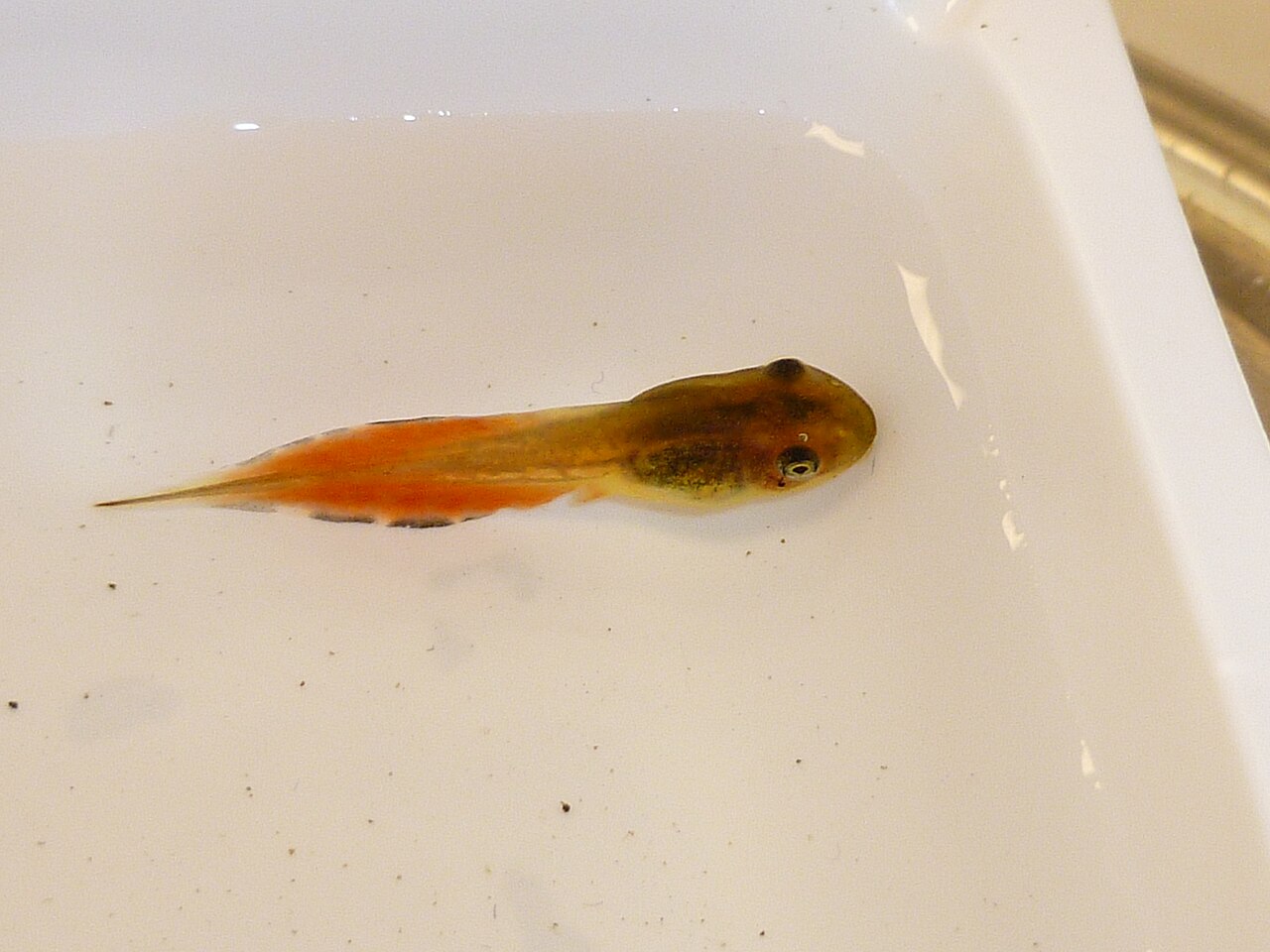
Brittany Sears · CC BY-SA 4.0
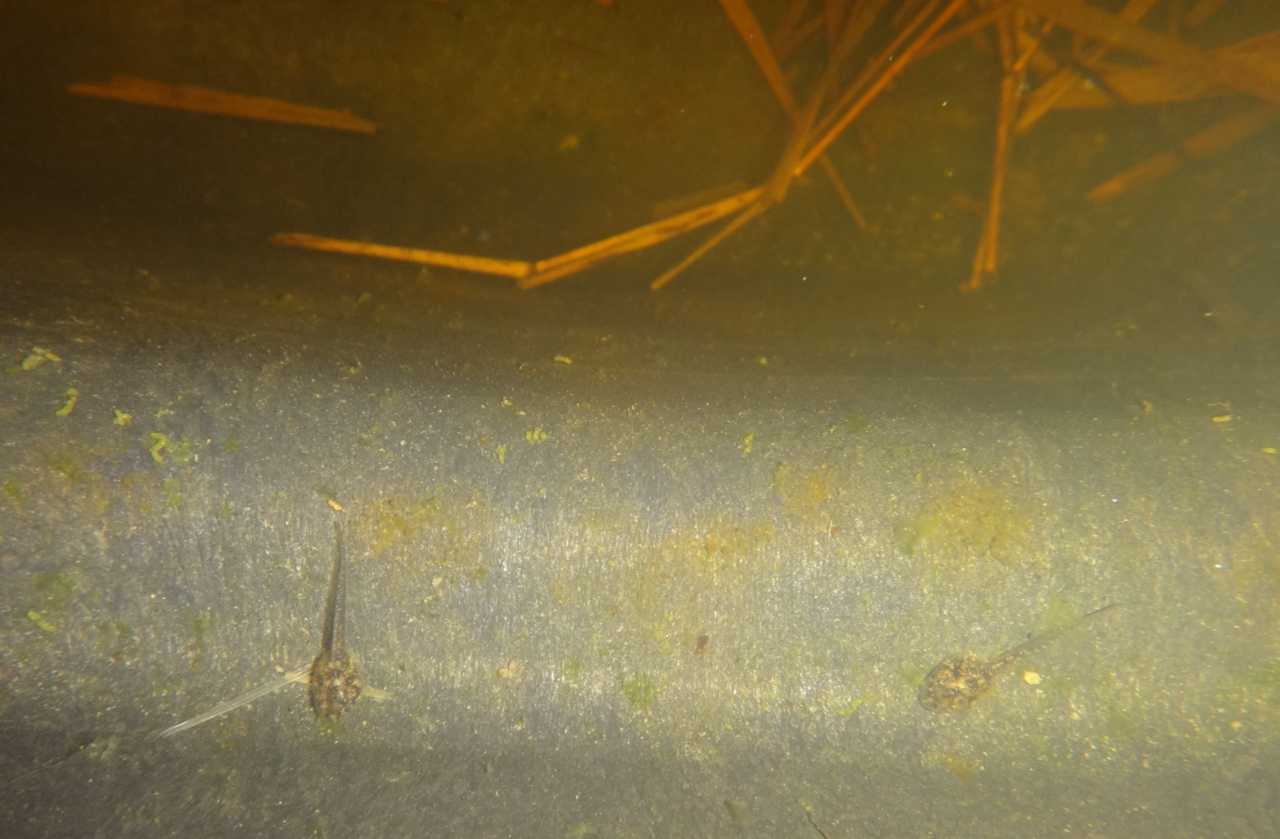
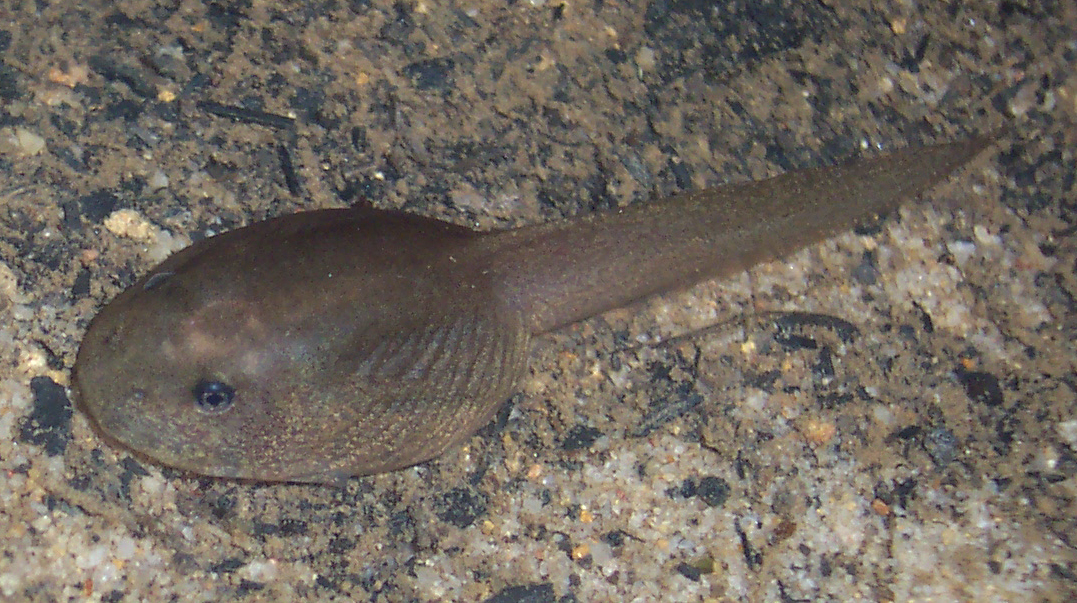
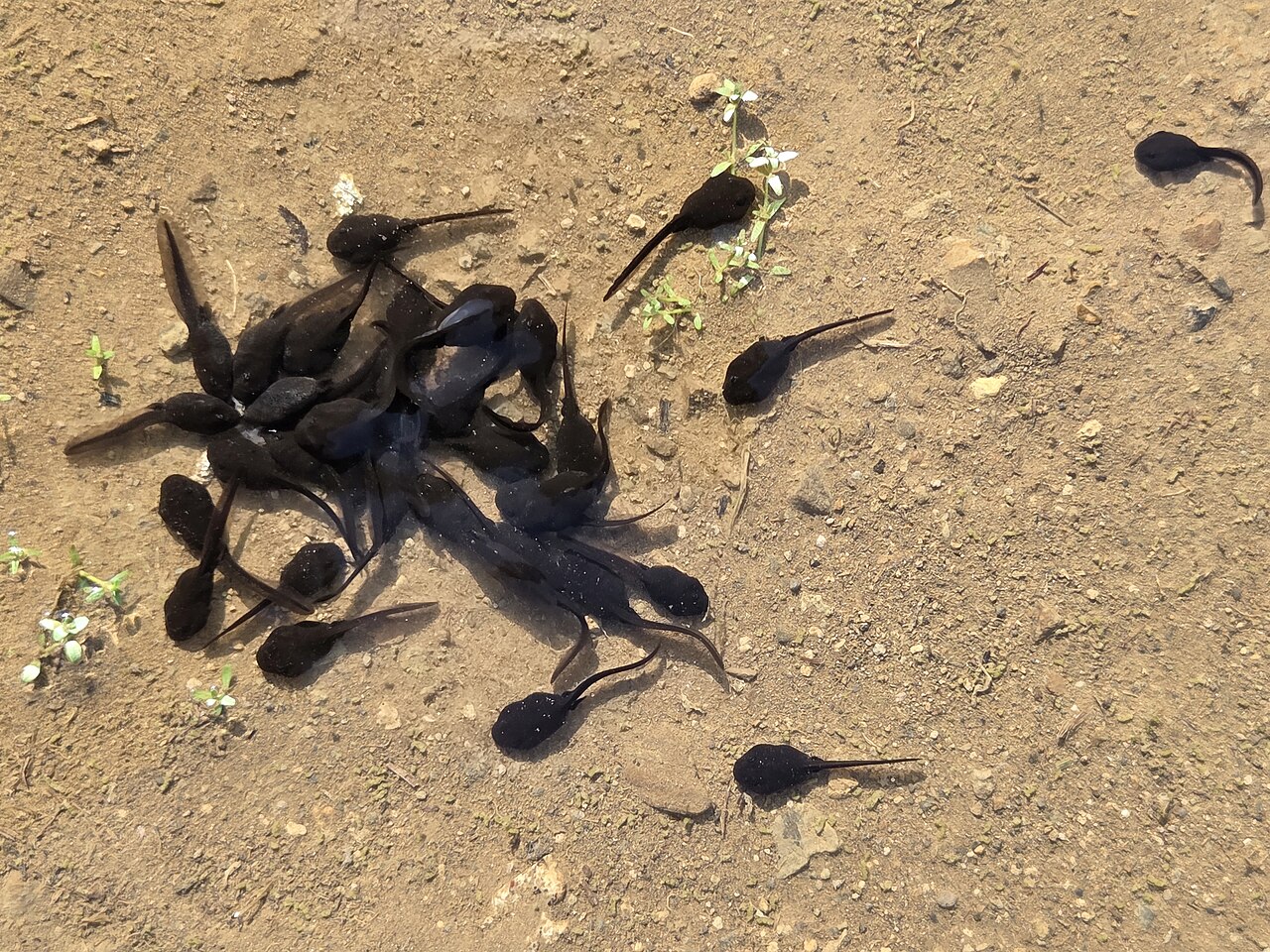
A tadpole or polliwog (also porwigle) is the larval stage in the biological life cycle of an amphibian. Most tadpoles are fully aquatic, though some species of amphibians have tadpoles that are terrestrial. Tadpoles have some fish-like features that may not be found in adult amphibians, such as a lateral line, gills and swimming tails. As they undergo metamorphosis, they start to develop functional lungs for breathing air, and the diet of tadpoles changes drastically.
- field
- Amphibian larval stage
- known_for
- Intermediate stage between embryo and adult in amphibian life cycles
- notable_feature
- Possess fish-like features including lateral line, gills, and swimming tail
Lore & Background
The life cycle of all amphibians involves a larval stage that is intermediate between embryo and adult. In most cases this larval stage is a limbless free-living organism that has a tail and is referred to as a tadpole, although in a few cases (e.g., in the Breviceps and Probreviceps genera of frogs) direct development occurs in which the larval stage is confined within the egg. Tadpoles of frogs are mostly herbivorous, while tadpoles of salamanders and caecilians are carnivorous. Anuran tadpoles are usually globular, with a laterally compressed tail with which they swim by lateral undulation. When first hatched, anuran tadpoles have external gills that are eventually covered by skin, forming an opercular chamber with internal gills vented by spiracles. Newly hatched tadpoles are also equipped with a cement gland which allows them to attach to objects. The tadpoles have a cartilaginous skeleton and a notochord which eventually develops into a proper spinal cord.
Reader's Guide
Tadpoles represent a critical developmental stage in the life cycle of most amphibians, serving as the intermediate form between embryo and adult. Their significance extends beyond biology into human culture and paleontology. Despite having no hard skeletons, fossil tadpoles have been found dating back to the Middle Jurassic, preserved by biofilms. Tadpoles are eaten as human food in some parts of the world and are mentioned in various folk tales from around the world. In the origin myths of the Wa people in China and Myanmar, the first Wa originated from two female ancestors who spent their early phase as tadpoles in a lake. The name tadpole is from Middle English taddepol, made up of the elements tadde, 'toad', and pol, 'head'. Similarly, polliwog and porwigle are from Middle English polwygle, made up of pol, 'head', and wiglen, 'to wiggle'. Tadpoles vary greatly in size, both during their development and between species, with the tadpoles of the paradoxical frog reaching up to 27 centimetres, the longest of any frog.
Did You Know?
- The name tadpole comes from Middle English taddepol, meaning 'toad head'.
- Tadpoles of the paradoxical frog can reach up to 27 centimetres in length, the longest of any frog.
Physical Form & Anatomical Distinctiveness
Triops longicaudatus presents a striking silhouette in the freshwater world: an elongated, segmented body capped by a flattened, shield-like carapace of brownish hue that drapes over roughly two-thirds of the thorax. The animal's most eye-catching feature is a pair of long, filamentous cercopods trailing from the abdomen, often stretching nearly the full length of the body itself. When these tail structures are included, the creature can reach approximately 75 millimetres—about three inches—making it one of the larger branchiopod crustaceans. Its coloration tends toward greyish yellow or uniform brown, setting it apart from the spotted, yellow-carapaced Triops cancriformis. The head houses a pair of nearly fused dorsal compound eyes alongside a deep-set naupliar ocellus, sometimes called the third eye, all visible through the translucent shell. Below, large mandibles with strong brownish teeth meet across the midline, while the second maxillae are entirely absent—a distinguishing trait. The trunk, ambiguously divided between thorax and abdomen by zoologists, carries between 54 and 66 limbs, and the body terminates in a pleotelson bearing long, multisegmented uropods.
Taxonomic Placement & Nomenclature
Within the broader tree of crustacean life, Triops longicaudatus occupies a position that bridges ancient lineages. It belongs to the class Branchiopoda, a group defined by gills borne on the legs, and more specifically to the subclass Phyllopoda—whose name literally translates to leaf-footed, a nod to the flat, leaflike appendages these animals carry. The Notostraca order, to which the tadpole shrimp belongs, sits within the infraclass Calamanostraca, a small grouping that also encompasses the extinct Kazacharthra, linking the living species to deep evolutionary history. The genus name Triops draws on Ancient Greek, combining tría (three) with óps (face or eye), a reference that likely alludes to the paired compound eyes plus the naupliar ocellus. The species epithet longicaudatus is Latin for long-tailed, a straightforward descriptor of those dramatic trailing filaments. Morphologically, the animal has long been compared to a miniature horseshoe crab, a resemblance that underscores how certain body plans persist across vast stretches of time and across very different branches of the animal kingdom.
Reproductive Versatility & Habitat Niche
Few freshwater crustaceans match the reproductive flexibility of Triops longicaudatus. Alongside only Triops cancriformis, it is the sole tadpole shrimp species whose populations can employ three distinct reproductive strategies: bisexual reproduction, unisexual parthenogenesis, and hermaphroditism. This extraordinary range of modes allows the species to persist in environments where mates may be scarce. In females, the eleventh pair of thoracic legs is modified into brood pouches, a specialized adaptation for carrying developing young. Ecologically, the species favors temporary and semi-permanent freshwater ponds and pools—often shallow, warm, and nutrient-rich bodies of water where competition from larger predators and higher trophic organisms is minimal. These are precisely the kinds of habitats where few other complex life forms can establish themselves, giving the tadpole shrimp a relatively undisturbed niche. Its uniform, unspotted carapace further distinguishes it from the bolder-marked T. cancriformis, and its overall body plan—elongated, armored, and leg-dense—reflects an organism well adapted to sifting through soft sediments in still or slow-moving water.
Feeding Mechanics & Locomotor Specialization
The feeding apparatus of Triops longicaudatus is often described as resembling the ancestral crustacean method, a window into how early arthropods may have processed food. The second through tenth pairs of anterior appendages work in concert to stir up bottom sediments and swirl muddy water into a broad midventral food groove running along the underside of the body. Inward-facing lobes at the base of each leg, called gnathobases, channel captured particles forward toward the mouth. Meanwhile, the large, flat exopods at the tips of the legs act as paddles, lifting and agitating the substrate to release embedded organic matter. Coarser food fragments are broken down by blade-like endopods, while fine silt and excess water simply pass through. The first pair of legs departs from this pattern entirely, taking on an elongated, cheliped-like form dedicated to sensory input rather than feeding. All remaining appendages serve the combined roles of feeding, respiration, and locomotion, while the numerous posterior legs sweep spent feeding and respiratory currents away from the body, maintaining a clean flow over the gill structures.
Gallery
Frequently Asked Questions
What is a tadpole in the context of amphibian development?
A tadpole, sometimes called a polliwog or porwigle, is the larval stage that sits between the embryo and the adult form in an amphibian's life cycle. It represents the first free-living phase after hatching and is the stage during which the organism prepares for its major body reorganization.
What fish-like features do tadpoles have that adult frogs lose?
Tadpoles carry a lateral line system, external gills, and a muscular swimming tail—structures that are typically absent in the adult amphibian. These traits give them a streamlined, aquatic body plan that is quite distinct from the four-legged adult they will eventually become.
How does a tadpole transition into an adult amphibian?
During metamorphosis the larva grows functional lungs so it can breathe air, reshapes its skeleton and limbs, and reorganizes its digestive tract. The tail is gradually resorbed as the animal shifts from an aquatic, filter-feeding lifestyle to a terrestrial, often carnivorous one.
Are all tadpoles strictly aquatic?
Most tadpole species spend their entire larval period in water, but a handful of amphibian lineages have evolved terrestrial tadpoles that develop on land. These exceptions show that the classic 'aquatic larva' model is not universal across all amphibian groups.
How does a tadpole's diet change as it develops?
Larval tadpoles typically feed on algae, detritus, or small particles using a specialized mouth and gut suited to that diet. As metamorphosis progresses, the digestive system is remodeled to handle the very different food sources—usually small invertebrates—consumed by the adult form.
More in Reproduction & Development 1-19
Spotted an error? Know more?
This is a living reference — every entry is fact-audited, and reader corrections feed straight into our audit queue. Suggest an edit · See this site's audit record